Hiking With a Dog: Everything You Need for a Safe and Enjoyable Trail
This post contains affiliate links. As a partner of Amazon, Travelpayouts, Stay22, and other travel and retail affiliate programs, I earn a commission if you click through and make a purchase or booking, at no extra cost to you. You can read my full affiliate disclosure here.
Hiking with a dog is one of the best things you can do together. Dogs are natural trail companions — they cover ground enthusiastically, they don’t complain about the weather, and they have absolutely no interest in checking their phone. But a successful hike with a dog takes a bit more preparation than heading out alone. The right gear, an honest assessment of your dog’s fitness, and an understanding of trail rules can make the difference between a great day on the trail and a difficult one.
This guide covers everything you need to know about hiking with a dog — from essential gear to trail etiquette, safety hazards, and how to find dog-friendly hikes across the US.
The information in this article was accurate at the time of writing but is subject to change. Pet policies, trail access, accommodation rules, pricing, and availability can change without notice. Always verify details directly with the relevant park, venue, or provider before making any bookings or travel plans. Pet Hooligans accepts no responsibility for any inconvenience, loss, or expense arising from outdated or incorrect information.
Is Your Dog Ready to Hike?
Before hitting the trail, it is worth being honest about your dog’s fitness and suitability for hiking.
Age. Puppies under a year old should not be taken on long or strenuous hikes — their joints and bones are still developing and repeated impact on hard trail surfaces can cause lasting damage. Older dogs can hike well into their senior years but may need shorter distances and more rest stops. If your dog has joint issues or any health condition, check with your vet before planning a demanding trail.
Fitness. A dog that walks for 20 minutes a day is not ready for a ten-mile hike on day one. Build up distance and elevation gradually over several weeks before attempting anything ambitious. Dogs are good at masking discomfort and will often push on past the point they should — it is on you to pace the day sensibly.
Breed. Brachycephalic breeds — bulldogs, pugs, French bulldogs — overheat easily and are not well suited to strenuous trail hiking in warm conditions. Short-legged breeds may struggle with rocky or technical terrain. Most sporting breeds, herding breeds, and mixed breed dogs take to hiking naturally, but every dog is different.
Temperament. A dog that lunges at other dogs or cannot be managed on a leash is going to make hiking significantly harder and less safe. Basic leash manners and a reliable response to commands are the minimum before heading out on a busy trail.
Essential Gear for Hiking With a Dog
The right kit makes a meaningful difference to how comfortable and safe your dog is on the trail. Here is what to bring.
Water and Food
Water is the single most important thing to carry for your dog on a hike. Dogs dehydrate faster than their owners on the trail — especially in warm weather or at elevation — and by the time a dog shows obvious signs of thirst they are already behind on hydration. Carry more than you think you need.
A collapsible dog bowl is the most practical way to offer water on the trail — it folds flat, weighs almost nothing, and fits in any pack pocket. Dog-specific water bottles with an integrated drinking trough are also worth considering for day hikes where pack space is limited.
For longer hikes, bring enough food for the distance. Active dogs burn significantly more calories on the trail than at home and a dog that runs out of energy mid-hike is a problem. High-value treats are useful for recall and for keeping energy up at rest stops.
Never rely on natural water sources as your primary water supply for your dog. Streams and lakes can carry giardia and other pathogens. If you are going to use natural water, treat it as you would your own drinking water.
Leash and Harness
Always carry a leash on the trail even if your dog has a reliable off-leash recall. Many trails require dogs on a leash at all times and the penalty for non-compliance can include fines and being asked to leave. Wildlife encounters, other hikers, and horses on the trail are all situations where a leash is essential regardless of how well-trained your dog is.
A standard six-foot leash is the right choice for most trails. A hands-free running leash that attaches around your waist is worth considering for longer hikes — keeping your hands free makes the day significantly easier on rougher terrain. Retractable leashes are not recommended on trails — they give too little control around other hikers and can tangle badly on rocky ground.
A well-fitted harness is more comfortable for most dogs on hikes than a collar, particularly on steep terrain where the leash tension is higher. Look for a harness with a handle on the back — useful for helping your dog over obstacles or lifting them across a tricky section of trail.
Dog First Aid Kit
A dog first aid kit is non-negotiable on any trail hike. Injuries happen — cut paws, minor lacerations, bee stings, insect bites — and having the basics to hand can prevent a minor incident becoming a serious one. A compact dog first aid kit should include antiseptic wipes, bandages, tick removal tools, tweezers, a small pair of scissors, and any regular medication your dog takes. Keep it at the top of your pack where you can reach it quickly.
Tick removal tools deserve special mention. Ticks are present on hiking trails across most of the US and should be removed as quickly as possible after being found. Check your dog thoroughly after every hike — paying attention to ears, between toes, under the collar, around the tail, and in the groin area. Don’t forget to pack a tick removal tool.
Paw Protection
Trail surfaces can be hard on paw pads — particularly rocky terrain, hot ground in summer, and abrasive surfaces at higher elevations. Paw wax applied before a hike provides a protective layer and helps prevent cracking and soreness on rough ground. Dog boots are worth considering for dogs doing frequent technical trail hiking or for hot-weather hikes where ground temperatures are extreme.
Check your dog’s paw pads during rest stops on longer hikes. Soreness, cuts, or worn pads are a signal to stop or turn back. A dog that starts to favour a paw mid-hike should be checked immediately.
High Visibility and Identification
An LED collar or clip-on light is useful for any hike that might run into low light — early starts, late finishes, or hikes in forest where the light drops quickly. A high visibility vest is worth having if you are hiking in areas with hunting activity, particularly in autumn.
Make sure your dog’s ID tag is current and legible. A GPS tracker attached to the collar is a sensible investment for off-leash hiking in remote areas — if your dog runs after something and does not return, knowing their location is invaluable.
Dog Backpack
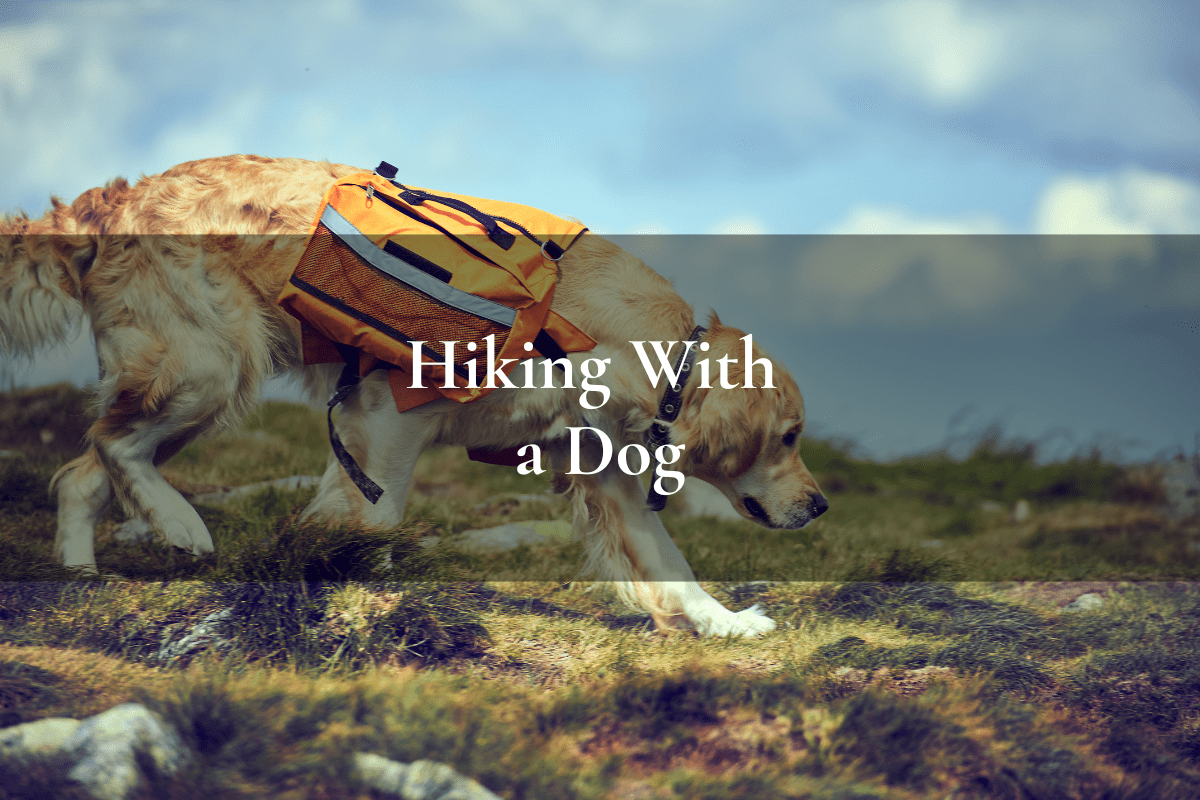
If you are doing longer or multi-day hikes, a dog backpack lets your dog carry their own food, water, and kit. Most dogs enjoy having a job and take to a backpack quickly. The general rule is that a dog should carry no more than 10-12% of their body weight — less for older dogs or those not used to carrying a load. Build up the weight gradually and never load a dog backpack on the first outing.
Trail Rules: What You Need to Know Before You Go
Trail access rules for dogs vary significantly across the US and knowing what to expect before you arrive saves a lot of frustration.
National parks are the most restrictive. Dogs are generally permitted in campgrounds and on paved roads but not on hiking trails. There are exceptions — Acadia National Park in Maine allows dogs on most trails, which makes it one of the best national park hiking destinations for dog owners — but they are the minority. Always check the specific national park website before assuming trail access.
National forests and BLM land are typically the most permissive. Dogs on leash are generally welcome on all trails and the sheer scale of the trail networks on national forest and BLM land makes these the best options for serious dog hiking across most of the country.
State parks fall in between. Most allow dogs on leash on trails but rules vary by state and by individual park. Check the specific park website before visiting.
Private trails and reserves vary widely — some are dog-friendly, some are not, and some charge a fee for dogs.
For dog-friendly trail recommendations by state, take a look at the Pet Hooligans dog-friendly hikes guides — they cover the specific rules and best trails across the country.

Keeping Your Dog Safe on the Trail
Heat and Sun
Heat is the most significant hazard for dogs on summer hikes across most of the US. Dogs cool themselves primarily through panting, which is far less efficient than sweating — they overheat faster than their owners and show fewer obvious warning signs until the problem is serious.
Plan hikes for early morning in summer, particularly in the South and Southwest. Carry significantly more water than you think you need. Take rest stops in shade. If your dog is panting excessively, drooling heavily, becoming unsteady, or seems confused, move them immediately to shade, apply cool (not cold) water to their paws, chest and neck, and get to a vet as quickly as possible. Heatstroke in dogs can deteriorate very rapidly.
Never leave a dog in a vehicle at a trailhead, even with windows open.
Wildlife
Wildlife encounters are part of hiking and dogs change the risk profile significantly. A dog that chases a rattlesnake, corners a porcupine, or barks at a moose has put both itself and you in a dangerous situation.
Keep your dog on a leash in areas where wildlife is known to be present. If you encounter a bear, stay calm, keep your dog close and quiet, and back away slowly. A dog barking at a bear is a much more dangerous situation than a quiet human encounter. In snake country — the Southwest, Southeast, and most warm-weather states — keep dogs away from rocky outcrops, brush piles, and tall grass where snakes shelter. Snake avoidance training is worth considering for dogs that hike regularly in high-risk areas.
Water Safety
Dogs will often wade or swim in any water they encounter on the trail. Blue-green algae, which can be lethal to dogs, is present in lakes and slow-moving water particularly in late summer — check for any local advisories before letting your dog drink from or swim in still water. Fast-moving mountain streams can be stronger than they look and smaller dogs can be swept off their feet quickly.
Other Trail Users
Good trail etiquette with a dog matters both for safety and for keeping trails open to dogs in future. Step to the side and put your dog in a sit when horses or cyclists pass. Keep your dog close on leash when passing other hikers. Always pick up after your dog — poo bags weigh nothing and leaving waste on trails is one of the fastest ways to get dogs banned from them.
Building Up to Longer Hikes
If your dog is new to hiking, start with short, relatively flat trails before building up to longer or more demanding routes. A few principles that help:
Start short. An hour on the trail is enough for a first outing. You can always do more next time; you cannot undo the damage of overdoing it.
Watch for signs of fatigue. Lagging behind, reluctance to continue, excessive panting, and stiffness are all signals to stop or turn back. Dogs will push on past the point of comfort if you keep going — the pace is yours to set.
Rest on the way out, not just on the way back. A dog that seems fine at the halfway point may be significantly tired by the time you return to the trailhead. Build rest stops into the outward leg of the hike rather than just at the turnaround point.
Check paws at rest stops. Look for soreness, cuts, or anything embedded between the toes. Catching a small problem early prevents it becoming a big one.
Give recovery time after a big day. After a long or strenuous hike, your dog needs rest just as much as you do. A day of easy activity following a big trail day helps prevent soreness and injury.
What to Pack: Full Gear List
For a complete list of recommended hiking gear for dogs — covering hydration, safety, paw protection, and trail kit — take a look at the full dog hiking essentials list:
🐾 Planning a hike with your dog? I’ve put together a list of everything I’d pack for a hike with a dog – from hydration gear and paw protection to safety essentials and foul weather kit. 👉 Shop the dog hiking essentials list
FAQs
What do I need to bring when hiking with a dog? Water and a collapsible bowl are the most important items. Beyond that: a leash, dog first aid kit, paw wax, poo bags, and enough food for the distance. For longer hikes, a dog backpack, GPS tracker, and paw boots are worth adding. The full list is covered in the dog hiking essentials list linked above.
Can all dogs go hiking? Most dogs can hike but not all are suited to long or strenuous trails. Brachycephalic breeds overheat easily and are better on shorter, easier routes. Very young puppies should not do demanding hikes. Older dogs can hike well but may need shorter distances and more rest. Build up gradually with any dog that is new to trail hiking.
Do dogs need to be on a leash on hiking trails? On most managed trails — state parks, national parks, many national forest trails — yes. Even where off-leash is permitted, keeping your dog on a leash near other hikers, horses, and wildlife is good practice. Always check the specific rules for the trail you are planning before you go.
How much water should I bring for my dog on a hike? A general guideline is around half a litre of water per hour of hiking for a medium-sized active dog, but this increases significantly in hot weather or at elevation. Carry more than you think you need — running short of water for your dog mid-hike is a serious problem on a warm day.
How do I know if my dog is too tired to continue hiking? Signs to watch for: lagging behind, reluctance to move, excessive panting, drooling, stiffness, or seeking shade and lying down. If your dog shows any of these, stop and rest. If they do not recover quickly with water and shade, turn back. Dogs will push on past the point of comfort if you keep going — it is on you to manage the pace.
Are dogs allowed on national park hiking trails? Generally no — most national parks restrict dogs to campgrounds and paved roads. There are exceptions, with Acadia National Park being the most notable. National forests and BLM land are a much better option for dog hiking and cover an enormous amount of trail across the country.
What should I do if my dog gets injured on the trail? Assess the injury. For minor cuts and abrasions, clean with antiseptic wipes and bandage if needed. For anything more serious — deep cuts, suspected broken bones, snake bite, signs of heatstroke — get off the trail and to a vet as quickly as possible. This is why carrying a dog first aid kit and knowing the nearest vet to your trailhead matters before you set off.

Hi, I’m Alison, the person behind Pet Hooligans.
I created this site to make travelling with dogs easier — whether you’re planning a weekend away or a longer adventure across the USA. Every post is designed to help you find places that genuinely welcome dogs, not just tolerate them.